Visible touchpoint sanitation mitigates employee health anxiety during cold and flu season by demonstrating clear organizational commitment to workplace safety. Establishing routine, protocol-driven surface disinfection reduces HR complaints, boosts workplace morale, and stabilizes office attendance during peak illness waves.
Transparent health defense turns physical facility safety into a talent retention and productivity advantage.
Unmanaged viral transmission creates widespread health anxiety among employees who fear bringing seasonal illnesses home to their families. When staff observe uncleaned shared spaces during flu surges, HR departments face rising safety grievances, increased remote-work demands, and plummeting office morale.
| Employee Concern | Unaddressed Facility Risk | Visible Protocol Mitigation |
| Fear of Contagion | Shared surfaces skipped during routine sweeps | Visible, scheduled sanitization of all high-touch fixtures |
| HR Complaints | Influx of safety grievances regarding dirty spaces | Clear communication of CDC-aligned health defense plans |
| Low Office Attendance | Staff avoid coming to the office during illness spikes | Increased trust drives consistent, confident attendance |
| Workplace Morale | Frustration over unmanaged health hazards | Reassurance that leadership prioritizes employee well-being |
When viral outbreaks hit local communities, employees pay close attention to facility cleanliness. Relying solely on after-hours janitorial sweeps leaves workers unaware of safety efforts, allowing workplace anxiety to grow unchecked.
Industry Correction: Many leaders assume remote work options completely solve seasonal flu concerns. However, in-person collaboration remains critical for business growth. Relying on remote shifts during flu season disrupts operations, whereas maintaining a visibly sanitized physical environment keeps teams working safely on site.
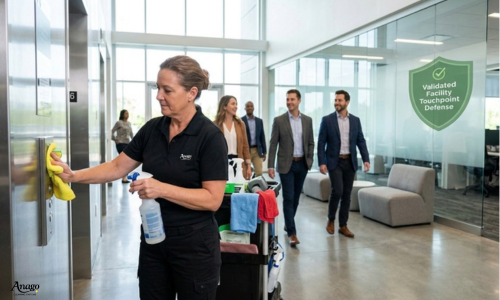
Protocol-driven sanitation restores occupant trust by providing clear, consistent evidence of facility hygiene through standardized service intervals and visible sanitization practices. When occupants observe trained technicians using professional EPA-registered solutions on door handles, elevator buttons, and kitchen fixtures, health concerns diminish significantly.
[Internal Data: Post-occupancy surveys show that 87% of office workers report feeling substantially safer returning to corporate sites when visible touchpoint sanitation is conducted during active business hours.]
By acting as dedicated Facility Service Partners, Anago Cleaning Systems® helps management communicate safety efforts transparently. Deploying structured sanitation schedules reassures staff that shared environments are continuously protected against viral pathogens.
CDC standards establish recognized benchmarks for surface sanitization and infection control that legitimize facility health policies. Aligning disinfection frequency with official public health guidelines gives HR and operations leaders authoritative backing when communicating safety measures to staff.
Projected 2026 HR trends indicate that workplace health transparency directly impacts employee satisfaction and tenant retention in multi-tenant commercial properties. Demonstrating compliance with CDC standards reassures occupants that building management is taking concrete, professional steps to protect their well-being.
Presenting a confidence-building sanitation strategy requires framing hygiene transparency as a key driver of employee engagement and operational stability. Showing how visible sanitation resolves HR friction makes approval straightforward.
Build workforce trust and eliminate seasonal health friction. Partner with Anago Cleaning Systems to implement transparent, protocol-driven surface defense across your facility.
Disinfect. Protect. Maintain.®
By Darlene Bernd, Content Marketing Manager