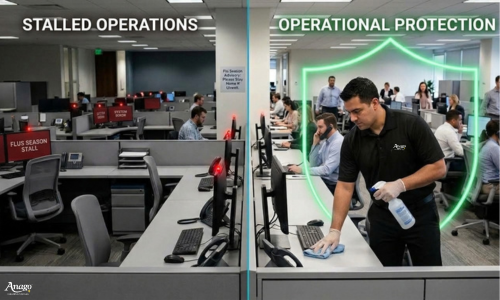
Preemptive cold and flu disinfection stops pathogen chains before widespread absenteeism triggers operational shutdowns. By deploying EPA-registered List N chemistry across high-traffic touchpoints prior to seasonal peaks, facilities protect employee health and maintain continuous daily output. Establishing structured infection controls shields organizations from sudden staffing shortages and severe revenue loss.
Cold and flu viruses spread rapidly through shared environments when multiple infected individuals deposit active pathogens on unmitigated surfaces. Without pre-emptive touchpoint sanitation, single cases quickly turn into department-wide outbreaks that halt production and strain remaining personnel.
| Downtime Factor | Unmanaged Flu Surge | Pre-Emptive Infection Defense |
| Pathogen Transfer | Rapid cross-contamination across shared touchpoints | Viral vectors neutralized on contact |
| Staffing Capacity | Sudden 30% to 50% call-out spikes | Stable attendance within normal baselines |
| Production Impact | Stalled lines, missed deadlines, lost revenue | Uninterrupted workflow and output |
| Facility Response | Panic-driven emergency cleaning at surge prices | Standardized, budget-friendly routine sweeps |
When early autumn brings predictable increases in viral transmission, relying on visual cleanliness leaves facility operations vulnerable. A single employee carrying a seasonal flu strain can contaminate dozens of shared surfaces in a single shift, spreading illness across entire teams before symptoms even appear.
Industry Correction: Many facility managers assume seasonal flu spreads primarily through airborne coughs alone, leading them to focus only on basic ventilation. In reality, surface-to-hand transfer on high-touch fixtures accounts for a massive portion of workplace cross-contamination. Neglecting touchpoint disinfection guarantees high infection rates regardless of air quality.
Preemptive disinfection applies List N-registered surface chemistry at regular intervals before local viral transmission rates peak. This continuous intervention destroys viral envelopes on contact surfaces, breaking the transmission loop between employees.
As Facility Service Partners, Anago Cleaning Systems® structures custom sanitization protocols that eliminate microbial threats before they disrupt your workforce. Proactive defense ensures your building remains fully operational throughout the autumn and winter months.
Unscheduled absenteeism during flu season forces companies to incur overtime wages, temporary labor fees, and lost production capacity. The financial damage of a localized outbreak often exceeds ten times the cost of a routine seasonal sanitation program.
Projected 2026 enterprise metrics show that a three-day operational stall in a mid-sized commercial or manufacturing facility results in thousands of dollars in lost throughput per shift. Scrambling after an outbreak occurs creates compounding financial strain.
Presenting an outbreak prevention strategy to leadership requires demonstrating how proactive infection defense preserves capital and protects daily throughput. Aligning sanitation metrics with executive priorities ensures fast budget approval.
Don't wait for viral outbreaks to disrupt your facility's productivity. Anago Cleaning Systems helps you mitigate risk and protect assets before seasonal transmission spikes occur.
A cleaner facility means fewer sick days and zero lost days.
By Darlene Bernd, Content Marketing Manager